Over the Volcano
Ben Dhiman's race report from the 2026 Transvulcania 73km, the fastest edition in the race's history, where he finished 5th in 6:48 behind David Sinclair's record-shattering 6:32.
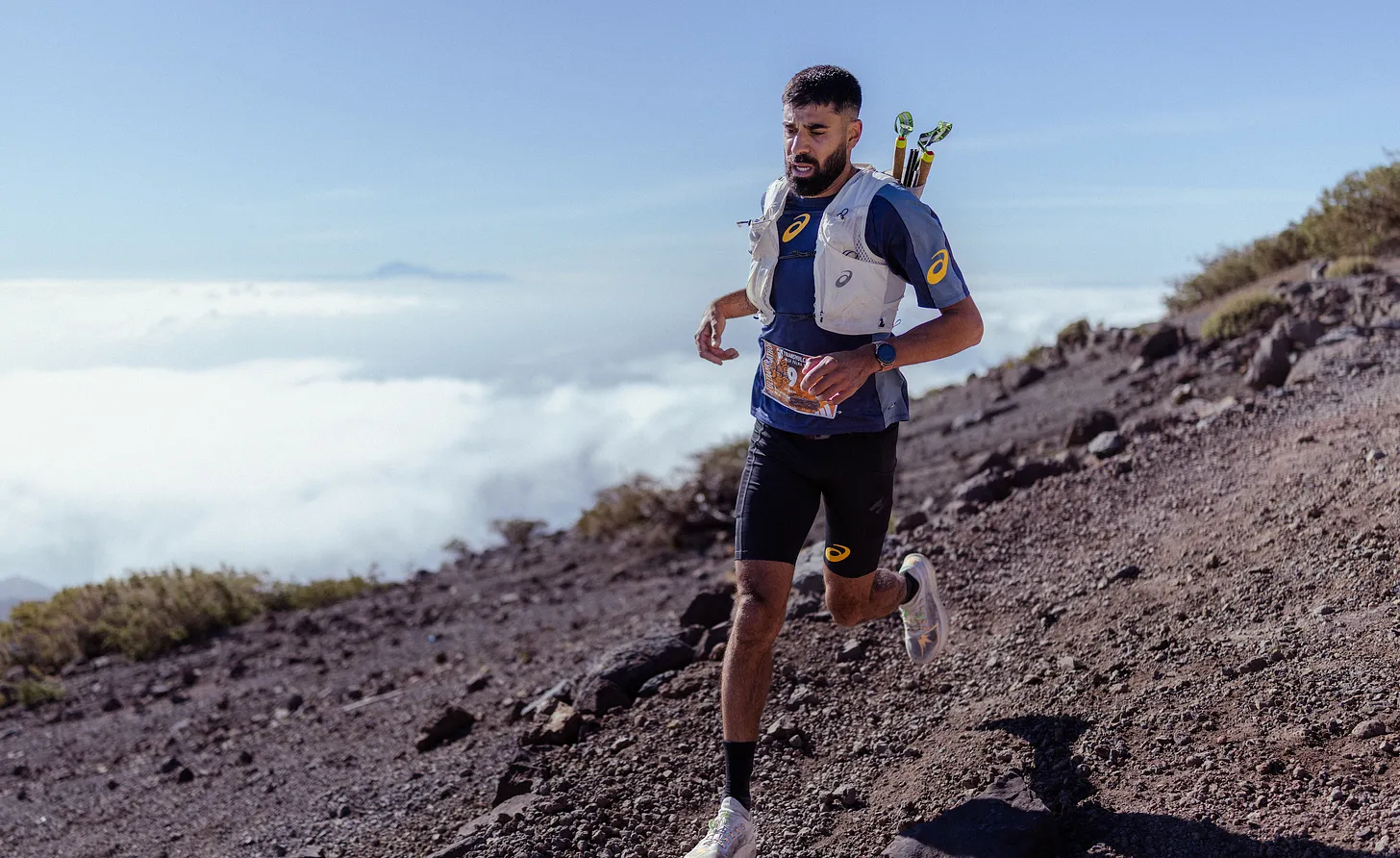
The 2026 Transvulcania 73km turned out to be the fastest edition in the race's storied history, with the top six men beating a course record that had stood since 2015 and two women also rewriting the record books. Ben Dhiman, an established UTMB-distance specialist, came in as a contender — and finished 5th in 6:48 without complaint about his performance. The race begins in pre-dawn darkness from the lighthouse and climbs incessantly up a long volcanic ridge — first over black sand, then through pine forests. Ben settled into a strong position at the back of the front pack, tucked in behind Petter Engdahl, Nadir Maguet, and David Sinclair. After two hours of climbing, the course finally opened up to some downhill and flat kilometres, and Ben felt his legs in top shape. He and David moved ahead, and Ben expected to be in the mix to the very end. But three hours in, the real test arrived: the jagged, upward-trending crest of the island above 2000m altitude. Ben couldn't float up the repeated steep pitches the way the featherweights did. David escaped first, followed by Damien Hubert and eventually Petter. Ben ran with Nadir for a while before getting dropped, then was forced to run the long descent in no man's land — 17km dropping 2400m to the ocean. He ran it in 1:22, while David's all-out 1:14 descent broke Petter and propelled him to an outrageous winning time of 6:32, shattering what people thought possible on this route. At the very end of the descent, Andreas Reiterer came flying down the rocky switchbacks and caught Ben. With 1km in a riverbed and a 20-minute climb to the finish remaining, Ben stayed alert, sat directly behind Andy, and made a small test push that Andy couldn't respond to. Ben opened a solid gap and secured 5th place in 6:48. In his post-race reflection, Ben acknowledges he did a poor job training specifically for this race — what amounted to a UTMB block at 70% volume, missing the steep running and shorter, more dynamic efforts needed to hang with the lighter specialists. But he sees the result as solid for a UTMB guy, and notes that the sport is evolving: this race may shift the benchmark toward what is now possible, not what has already been done.